Showing posts sorted by relevance for query written by Dhivya. Sort by date Show all posts

Vegetarian Food Pyramid – A Series

Monday, January 19, 2009

Posted by DK


In recent years, with words like Diabetes, Cholesterol and Blood Pressures becoming commonplace in many households, we all are turning to crash diets, low-carb foods and probably to Jenny Craig’s. And no – I dint leave out the obvious “exercise” by mistake. The fact is, that anything worth taking effort, is thrown into the back burner by many of us. I am not going to elaborate on the benefits of exercise, it has been insisted at Daily Tiffin often enough. I am going to concentrate more on foods which not only help to us get healthy but also help to reduce the unnecessary bulk efficiently, without having to go through yo-yo dieting.

Vegetarian foods need not be bland or boring. Consuming whole foods mean that our intake has not been heavily processed by way of chemicals, additives or unnecessary flavorings. Such foods are loved by our body and regular ingestion of these will purge our system of harmful toxins. The purpose of this series is to talk about such foods, expand our knowledge base more about these ingredients with some basic recipes, which are delicious and colorful to boot, so that we can start adding them in our day to day meals. One doesn’t have to become a vegetarian to be healthy – it simply requires us to include some good food options to make a difference to our lifestyle.

I. Grains.

Let me kick start this series with the staple of all foods - Grains. They are available in so many forms from whole grains, rice, cereal grains to flours and the options are endless. They have been cultivated all around the world and are a staple in most of the countries. Each one of them have their own value added benefits which make them one of the most sorted out food groups by health gurus.

1. Oats

This is commonly seen in almost all our pantries. Oats are warming, filling and are popular grains in many places around the world esp. Scotland, where they are usually enjoyed as pancakes, oatcakes and as hot oatmeal. They are available in a variety of forms – as regular oatmeal, rolled, flaked or as oat bran. Here are the various types and their ways to cook and benefits.

Types of Oats

a. Oat Groats.

These are whole oat grain - the hulled whole kernel. They have a nutty flavor and a very chewy texture. They are best in breakfast cereal although from my experience they are an excellent rice substitute too. Have you ever tried to make patties with these? They are excellent – taste wise as well as nutrition wise.

How to Cook Oat groats?

Clean the groats well with cold water. Soak Oat Groats overnight. One can use any of the following methods to cook them.

Stove top method:Simmer 1 cup of groats with 2 cups of water, salted. One can also use milk or broth instead of water. It takes about 45min to 1 hour

Rice Cooker method: The process is similar to cooking rice. Use 2 cups salted water/broth to 1 measure Oat groats. It usually takes me a little more than 45 minutes.

Crockpot method: Although I have not tested this method personally, this works very well for an acquaintance of mine who uses 2-1/2 cup to 3 cups salted water for 1 cup of oat groats for cooking in her crock pot on low overnight.

b. Oat Bran

Image courtesy : Purcell Mountain farms

This is the outer coating of the oat grain and is rich in fiber. These are mostly available in your local health markets. The bran is an excellent addition to cookies, muffins, breakfast, breads, pancakes, cereals or as topping. I have sometimes used them even in Roti’s (Indian flatbreads) to good effect. It is better to buy Oat bran in small quantities since they go rancid quickly. Freezing them prolongs the shelf life.

c. Rolled Oats

Rolled oats are nothing but groats which have been pressed flat by heating. Rolled Oats are found in different forms and one would often find these common types in the market:

1. Old Fashioned Rolled Oats:

They are made by heating groats and flattening them with a roller. The very thin rolled version of the same produces very creamy oatmeal than thickly rolled ones. The Quaker Old Fashioned Rolled Oats are thinly rolled and theirs is considered the industry standard and considered to be the regular Old fashioned rolled oats. The thicker ones are referred to as Thick Old Fashioned Rolled Oats.

How to Cook Old Fashioned Rolled Oats:

Stove Top Method: Bring required quantity of water or milk to a boil. Stir in the oats and stir occasionally for about 5-8 min over medium heat until done. Use sugar or salt as per taste.

Microwave Method: Combine the oats with either milk or water along with salt(or sugar) in a microwave safe bowl. Microwave for about 3-5 min. The cooking time varies depending upon your microwave. Stir well and then serve , topped with fruit of choice, with honey or raisins etc.

2. Quick- Cooking Rolled Oats:

Just as the name emphasizes, these are quick cooking variety of Oats and this is because these are made by flattening the pre-cut groats and rolled very thinly using the rollers. Although it is called as Quick cooking, it takes more or less the same amount of time as that of Old fashioned Rolled Oats. Cooking Instructions are same as that of Old Fashioned Oats. I find that it takes about 2-4 min to cook these quick cooking oats.

3. Instant Oats:

Usually there is no cooking involved in these varieties and just adding it to warm milk/water is enough. These are precooked, hence the speed at which it is done. Although they are convenient, it is not advisable since it is loaded with preservatives and other additives. Instant Oats = Instant harm! :) Any recipe asking for Instant Oats can be substituted with quick cooking Oats.

d. Steel Cut Oats ( also referred to as Scottish Oats, Irish Oats or pinhead Oats)

These are immensely healthy since they unrefined and are closer to the natural oat grains. These are formed by cutting the oat groats into smaller pieces. As the name suggests they form the basis for making the Traditional Scottish porridge. They take a little longer time to cook than regular oats.

How to Cook Steel Cut Oats:

Stove-top Method : For 1 cup of Oats bring about 3-4 cups of water to boil in a saucepan and stir in the oats. Keep the heat on high and keep stirring until it thickens up – approximately 5-8 min. Once it becomes thick, stir well, lower the heat to a simmer, cover with a lid and let it cook for another 30-45 min until done. A little milk can be added once done.

Microwave Method: This is not the best method since its need stirring quite often so that the oats does not stick to the bottom. But if needed, follow the same method as mentioned for stove top method taking care to stir every 5 min. The cooking time, although is much lesser taking approximately 20-25 min, again depending on the microwave.

e. Oat flour

These are excellent alternatives to refined flours in baking, although it requires other flours to rise since it does not have any gluten required for bread to rise. If making quick breads, then no additional flours is necessary. Oat flours can be made at home very easily by grinding rolled oats in a food processor. It takes about 2 cups of old Fashioned Rolled Oats to make 1 cup of oat flour.

f. Oat Sprouts

One of the best ways to consume Oats is by sprouting them - which are much thicker than other sprouts. The benefits are countless and they are an excellent addition to – breads, soups, smoothies etc. Make sure you use unhulled Oat seeds for sprouting. Oat groats do not sprout.

How to Sprout Oats:

1. Rinse the oats in cold water until the water runs clear. Transfer into a wide-mouthed jar or sprouting vessel and cover it with twice or thrice the amount of water. Cover the jar and let it soak for 8 hours.

2. Drain and then rinse the oats. This time return them into a jar without any water and cover the mouth with a cloth. Direct sunlight should be avoided.

3. Repeat step 2 every 8 hours for 2-3 days until you see the sprouts. Rinse once again and store it in the refrigerator. They keep well for 10-14 days.

Health Benefits of Oats

Oats is one of the nutritious grains whose health benefits are immense. From helping to lower the bad cholesterol (LDL) while increasing the good cholesterol (HDL), to helping prevent certain cancers, Oats are especially considered to be a boon to people suffering from Celiac disease. They are high in fiber, phytonutrients, Vitamins E and B as well as iron, potassium, magnesium and calcium.

Oat bran consists of bulk of dietary fiber of the grain. Oat Sprouts are rich in vitamins and minerals including essential amino acids and proteins. The whole grain oats is said to contain 7 B vitamins and 9 minerals and twice the protein content as that of wheat. Isn’t that amazing!

What better way to start a day,knowing that every spoonful of that simple oatmeal is loved by our body.

This post was written by Dhivya


Are you interested in contributing to The Daily Tiffin? Drop us an email: thedailytiffin@gmail.com. We look forward to hearing your ideas.

Vegetarian Pyramid Series - Seitan

Friday, October 30, 2009

Posted by DK


It sounds like ‘Shaitan’ and probably looks like one to most of us! But sometimes good things come in ugly packages and Seitan follows that literally. The first time I saw it, I made up a face similar to its looks but then after reading considerably about it, I thought why not. I am so glad I did cos not only it is an excellent meat replacement, is a super duper source of protein for vegetarians like me. Come to think of it, it doesn't taste bad either.


Image source from wikimedia

So what exactly is Seitan?

It is made from gluten, the protein part of wheat. It is popularly known as ‘vegetarian meat’. It is also known by other names in different places – wheat meat, gluten or simply gluten meat. It has a very chewy and firm texture.Instead of reaching out for imitation meat in your local stores, which by the way has loads of additives, it would be a great idea to use seitan instead. It is immensely nutritious and without any artificial flavors. Seitan does not have any flavor of its own and hence it benefits from a marinade. Mostly you will find the precooked variety of seitan, hence simply adding it at the very end is enough. You can chop it or slice it and it goes extremely well in stir fries or stews of any kind.

Availability

Mostly available in health stores and in Asian specialty markets. Next time you visit one, don’t forget to look out for Seitan.

Benefits of Seitan

The protein content is humongous - About 85gms of Seitan consists of 18gms of Protein! It is also filled with essential amino acids and if cooked in soy sauce based broth then it would enhance the amount of vitamins and minerals. A four-ounce serving of seitan supplies between 6 and 10 percent of the U.S Reference Daily Intake of vitamin C, thiamin, riboflavin, niacin, and iron.

To kick start your cooking with seitan, here are some sample recipes with Wheat gluten.

I have one simple and amazing recipe with Seitan. Its Vegan sloppy Joes. You know how some kids have problems eating any vegetables? ( or should I say anything healthy?!!). A friend of mine recently brought her son, who is die hard carnivore, to my place. Being a vegetarian, I thought why not make something which looks like a non-vegetarian and also has nutrition. I made these sloppy joes with couple of vegetables, beans and seitan and they were gladly gobbled up by him!


Other interesting recipes from the net

  1. Southern Fried Vegetarian 'Chicken'
  2. Mexican "Seitan" Fajitas
  3. Spicy "Seitan" Buffalo wings


This post was written by Dhivya

Are you interested in contributing to The Daily Tiffin? Drop us an email: thedailytiffin@gmail.com. We look forward to hearing your ideas.

Vegetarian Pyramid Series - Millet

Friday, September 25, 2009

Posted by DK


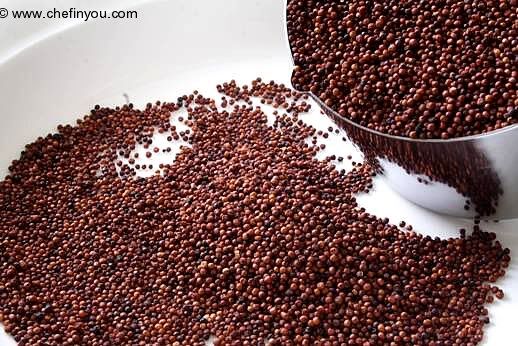
Many of my Indian friends here bemoaned about lack of availability of Millet in the US of A, when I first moved here. I was surprised to hear that since I sort of remembered seeing lots of millet in the stores esp. in Health foods market. When I told them that, they informed me that they were talking about a different kind of millet altogether which was often confused with regular millet here in the stores. They told me they were talking about Indian Millet which is otherwise called as Finger Millet.

source: http://www.biztrademarket.com/User/174611/bb/millet_8su.jpg

Well if you give a glance at what Wikipedia has to say, then you would know that Finger Millet is not a different Millet but is actually just a type of millet. Among the different available ones like

1. Pearl Millet
2. Foxtail millet
3. Proso millet
4. Finger millet

Indians are fans of finger millet which is otherwise and commonly knows as Finger Millet. It is treasured by the Indian population thanks to the unavailability.

Finger Millet

A recent statistics in some Food Magazine enlightened me with the fact that Millet ranks as the 6th most important grain in the world, sustaining about 1/3rd of the world's population!!!!! Quite a celebrity, Millet is!:)

Millet is Gluten Free
Hence can be consumed by the celiacs and by those with wheat allergy. You can make breads, flatbreads or just enjoy them as pilafs. Since it does not have enough gluten essential for bread making, you would have to use it in conjunction with other flours.

In India the finger millet is ground as flour and taken in the morning as porridge. They are also sprouted to make Malt, ground together with other ingredients to make Indian crepes and also made into numerous snacks and tiffin items like roti's, pakodas etc. Try it as a
1)cooked cereal,
2)casseroles,
3)soups,
4)stews,
5)souffles (yes, you heard right!),
6)pilaf or as
7)simple stuffing.

The versatility of this grain is boundless

How to cook Millet?
Millet is a bland grain having no distinct taste of its own. It adopts the flavors from the other ingredients cooked with it. Toasting it before cooking helps to enhance its taste.

For 1 cup of Millet, it takes about 2 cups of liquid and a cooking time of approximately 20-30minutes.

If you leave it along as it cooks, the texture would be similar to that of rice - fluffy! But stir constantly with some liquid added at regular intervals ( like that of Risotto), it could end up resembling mashed potatoes. A fellow blogger informed me that her Millet takes longer to cook and more water to get the fluffier texture. She uses

For 1 cup of Millet 3 cups of boiling water and simmer for approximately 30 minutes.

I think the cooking time and liquid measurement depends on the variety or specific type available in that particular locality. You can also pre-soak the millet which will reduce the cooking time to 5-10 minutes. You can soak it overnight and steam the next day for about 30 minutes or until tender too.

Millet Sprouts and Flours.
I have never sprouted the pearl millet before although I have sprouted finger millet and made flour out of it to make my morning porridge.


The Millet flour produces dry, light and v delicate baked goods. It makes great crust which is thin and buttery smooth.


If using with yeast, you would have to use other glutinous flours to get the classic rise from yeast. You can also use it as a topping for your baked goods to get that crust. Try this Stuffed Millet Bread for starters. It makes a great accompaniment to soups and a wholesome lunch!

Nutrition
Its one of the major foods in India and for a good reasons. It is about as high in Protein as wheat and is a mineral powerhouse. It contains niacin,vitamin B6, folic acid and bits and pieces of calcium, iron, potassium,magnesium and zinc - well enough to make it nutritious.

How to Buy and Store
Buying organic Millet at your local health stores is the best. I haven't seen them in other stores. They keep well if stored in air tight containers and stored in dry cold shelves. It would be a great idea though to refrigerate them if you have a very hot and humid weather in the place where you live. Properly stored whole millet can lasts up to 2 years. The flour goes rancid very fast- hence use it fast and store it in freezer.

This post was written by Dhivya

Are you interested in contributing to The Daily Tiffin? Drop us an email: thedailytiffin@gmail.com. We look forward to hearing your ideas.
Vegetarian Pyramid Series - Kamut

Thursday, August 27, 2009

Posted by DK


“What we know is a drop, what we don’t know is an ocean.” (Isaac Newton)

This proverb holds so true whenever I visit my local health stores. Every time I assume that I am getting to the end of familiarizing myself with myriad range of whole grains (or any other ingredient for that matter), a new one pops up taking me completely by surprise. This is what happened about 6-8 months back when during my window grain shopping. I saw some fresh Kamut grains.


I got very curious and researched more about them. Kamut is an ancient grain and relative of Wheat. It was supposed to be originally from Egypt where stories go as far of it being taken from the Egyptian tombs. Some other studies say that they probably originated from Asia too. Anyways irrespective of wherever they are from, they are available in most areas of North America, Australia, Europe and in few Asian countries.

How to use Kamut?
Kamut is available in various forms in the market now days. You will see

  1. Kamut Berries (see how to cook them here),
  2. Kamut flour – these make delicate baked goods inspite of being high in gluten. Use them in place of whole wheat pastry flour in any recipe. I sometimes use them to replace half of white flour in my baking recipes,
  3. Kamut Cereals sometimes find their way into my breakfast as a hearty porridge
  4. Kamut crackers makes a great snack in the evening topped with dips and salsa
  5. Kamut pasta making life much easier especially in cases when other forms are not available. Also its so much simpler to consume this whole grain in this form without getting into any time consuming effort too. No excuses to avoid eating them in any case.

Health Benefits of Kamut
Though it’s a cousin of Wheat, it has a higher nutritional value than whole wheat. It compares in the following points
  1. 40% more protein,
  2. more minerals,
  3. 65% more amino acids,
  4. more magnesium and
  5. 30% more vitamin E makes it stand up mightier than wheat.
The controversy - to eat or not to eat, that is the questions (for celiacs)

From what I read in few books, they claim that Kamut (though wheat based) could be tolerated by people suffering from Celiac – if eaten in moderation. But other sources deny this claim outright.

Few people from Gluten Intolerance Group actually were kind enough to point that out to me in my Article about Kamut in my blog that it is not advisable for such people (including wheat allergies) to consume this grain which in some cases could lead to death (!!)

The end result? I would say better safe than sorry. If you have any wheat allergies or are suffering from celiac disease, avoid even going near the grain! Whenever there is dispute about such things, I usually take the safer route and would advise the same.

For the rest of us, if you have never tried this grain before, here are couple to start off. Simple, fast and delicious.


This deliciously simple and subtly healthy kamut pasta with baked asparagus is a winner in its own right.


Everything but the kitchen sink Kamut Pilaf is not only hearty but also healthy with mixed greens and baked Tofu. What a way to clean your fridge out :)


This post was written by Dhivya

Are you interested in contributing to The Daily Tiffin? Drop us an email: thedailytiffin@gmail.com. We look forward to hearing your ideas.
Vegetarian Pyramid Series - Corn

Saturday, November 28, 2009

Posted by DK


Person1 : I am planning to buy some polenta today..
Person2: Buy? Why go for ready made stuff? You can make it so easily at home….?
Person1: Make? How am I going to make some wholegrain at home??
Person2: ????

As if the idiosyncrasies of the English language was not enough (quoting my German professor!), we have similar terminologies to mean different things in the Food dictionary too! It can sure be quite confusing at times. The word “Polenta” is used to mean a dish made with cornmeal as well as the cornmeal itself. When it comes to cornmeal, the variety available in the markets now days is simply mind boggling to say the least. Let’s take a quick look at corn shall we?

Corn is a wholegrain which falls under the category of cereal grasses. If you walk down your food aisle in the market, you will come across yellow corn (otherwise known as maize) and other corns colored red, blue and black. I recently happened to see multicolored varieties too. There are many corn products too.It is a staple in many countries around the world with having prominence in U.S.A, Italy and the Caribbean. (White cornmeal - image courtesy -ansonmills.com)


The most commonly available forms of corn are –

Cornmeal

The minute ‘cornmeal’ is mentioned, the first thing that probably comes to an American’s mind is the classic cornbread. For the Italians, its ‘Polenta’.

Polenta has a golden, thick-porridge like consistency and is flavored with butter and cheese. They make an excellent alternative to Mashed Potatoes. It is also used to make dumplings and puddings in the Caribbean.

Masa Harina
Masa Harina also known as Maize meal is made from the cooked wholegrain where it is ground into flour. This flour is mostly used to make Mexican flatbread called as Tortillas. (Yellow cornmeal - image courtesey - ansonmills.com)

Cornstarch
This is a fine white powder mostly used as a thickening agent for stews, soups, casseroles etc. Sometimes it is also used in baked goods and in making desserts. (cornstarch -image courtesy -Bonappetit.com)

Hominy or Grits?
There is big confusion regarding these two where they are sometimes used interchangeably.

Hominy are the husked whole grains of corn. To use them, they have to be first softened by cooking them in hot boiling water and then used in other dishes like soups, stews or in any baked goods.

Grits are in fact coarsely ground dried yellow or white corn. They can be used in baking and also for pancakes.

There is wonderful article which throws more light about Hominy grits and corn grits with humorous analogies at mrbreakfast.com. Also a discussion regarding the finer differences between corn products can be seen here at Chowhound.com.

Popcorn
We all love popcorns don’t we? This is a completely separate strain of corn which is grown specifically for this purpose. The kernels can be store bought and the popcorns can be easily made at home with any type of seasoning added as per taste.

Corn syrup
This artificial sweetener is a staple in many households now. Though the name suggests it, it is not made by directly pulping the corn. Instead it is made from cornstarch which is actually the pulpy middle layer of the corn where it is separated from its outer husk and its inner germ layers. Storage of these in giant vats helps it to produce glucose when natural enzymes are added to it. This glucose is heated and made into corn syrup. It’s used in candy making and also in baked goods.

Few recipes with Corn based Products
  1. Skillet Polenta Pizza
  2. Iron skillet Jalapeno and Cheddar cornbread
  3. Corn Muffins
  4. Corn Tortillas
  5. Blue cornmeal pancakes
Health benefits
Corn plays an important role in American folk medicine where its famed to be a diuretic and a mild stimulant. Few studies have shown that it even helps to prevent colon cancer and lowers the risks of heart disease. Corn is one of the few grains (or probably the only one) that contains vitamin A as well as Vitamin B and iron. It has about 18.4% of daily recommendation of fiber. Since its high on fiber, it helps to lower levels of cholesterol in the body along with blood sugars proving beneficial to diabetics.

This post was written by Dhivya

Are you interested in contributing to The Daily Tiffin? Drop us an email: thedailytiffin@gmail.com. We look forward to hearing your ideas.
Vegetarian Food Pyramid - Wheat Germ

Sunday, April 12, 2009

Posted by DK


Of all the grains that I have been talking about in my previous editions of the Vegetarian Pyramid series, I consider Wheat to be one of the pivotal ones. The amount of wheat that I consume is a standing joke in my family. Chapathi this, wheat bread that and only god knows what else. That being said, the next few editions are going to be solely about wheat and wheat products - yeah, they are quite a handful in number. The various by products come from the main grain wheat - which comprises of three parts - bran, germ and endosperm. Each one has a substantial role in providing nutrition. In short, wheat as a whole is one of the nutritious wholegrain. Let me start off with one of my all time favorites of wheat products. The number of recipes in my blog which have wheat germ is quite a large number where I find ways and means to incorporate them in my day to day food.

Image courtesy:Wikipedia

What is Wheat Germ
Wheat germ is the nutritious seed from which the wheat plant grows. Hence, it is needless to say that it forms the nutritious heart of whole wheat berry. Why the term "Germ" then you might ask? Don’t worry, it has nothing to with any creepy crawlies from the mud - the term here actually denotes to "Germination" since it is the reproductive part from which the wheat grass grows. The wheat germ has only small real estate in the whole of the kernel - only about 2-1/2 percent.

How to use it in cooking?
Using wheat germ in cooking is a like dream. From normal roti's (flatbreads) to almost everything in baking, they are the easiest ingredients to work with. Their taste often goes undetected in your baked goods. Its that mild. Next time you plan to make your own bread, cookies etc, just substitute about 1/2 cup of the required flour with wheat germ. Or use it as a topping for your baked goods. They can also be used in normal day to day vegetables, meat or yogurt Because wheat germ tends to absorb moisture, you may want to add one to two tablespoons of water for every one-quarter cup of wheat germ you add to a recipe esp. if its baked goods.

Here is a sample recipe to work with.
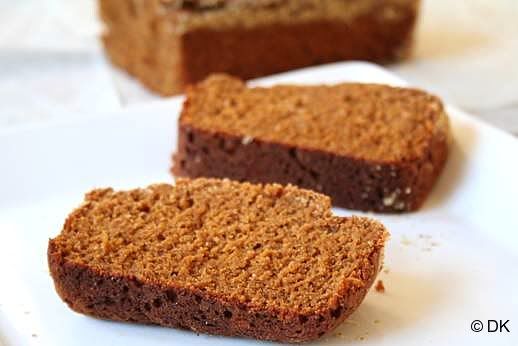
This Wheat germ and molasses bread is one of my absolute favorites. In this recipe I have used wheat germ extensively and it works immensely well with molasses. Its moist yet firm in a delicious way. This bread keeps very well and is a blessing for those evenings when snack attacks are likely to happen :)


How to buy and store
Wheat germ is available both toasted and untoasted. My personal choice is to buy untoasted and if I really require it to toast some when needed. There is really not much of a difference to me personally between them in taste. They can be bought in health stores although I find them often enough in my regular supermarkets too.

Since it is brimming with unsaturated fat content, it is inevitable that wheat germ will go rancid pretty fast if you store it at room temperature. Once you have removed the seal, make sure to store it in a air tight container in your fridge.

Health benefits
This section is probably going to be much bigger than rest of them put together. Yes - that’s the health factor in wheat germ for you :) To make it easier, let me place them in points.

  1. It is immensely rich in protein. It contains about 28 percent protein and supposedly has more than most meat based products.
  2. It contains more potassium and iron than any other food source
  3. It is an excellent source of important B vitamins, such as folic acid, thiamin, vitamin B6
    and minerals like magnesium, manganese, and zinc
  4. It contains a phytonutrient called L-ergothioneine, a powerful antioxidant that is not destroyed by cooking.
  5. It has fiber that will put even most of the other "fiber rich" foods to shame.
  6. Some research show that the oil from wheat germ gives strength and longevity.
  7. It helps to fights colon cancer
  8. It can prevent constipation and it can improver digestion.
  9. In addition it protects us from heart disease and can help stop strokes
  10. It contains a substance called as Octasanol which :
    a) Helps to fight against muscular disorders such as muscular dystrophy and neuro- muscular problems.
    b) Boon to people suffering from cholesterol since it helps to lower the same.
    c) Improve muscular energy
    d) Improves reflexes
    e) Improves the utilization of oxygen during exercise.
    f) Helps the body to cope with stress.


With so many factors, are you still going to ignore that wheat germ packet the next time you cross that aisle? :)

This post was written by Dhivya


Are you interested in contributing to The Daily Tiffin? Drop us an email: thedailytiffin@gmail.com. We look forward to hearing your ideas.

Vegetarian Food Pyramid - Barley

Wednesday, February 25, 2009

Posted by DK


The next in the line of my series (see my previous post here) is going to be Barley. I have all kinds of Barley at home (at least all the ones I can find that is :)). The reason? Well Barley, a grain of the grass family, is among the oldest cultivated grain and is one of the most nutritious grains there is. I still remember how I used to keep my face when my mom forced the barley water down my throat in the name of health. I guess if she hadn't said precisely used "health reasons" , then I would have probably gulped down glass after glass :) – which of course I realize now in the aftermath. Barley forms one of the principal diets among the Eastern Europe, the Middle East and among the Asians.

Types of Barley

Let me now go into the different types available and their cooking method.

Different Types of Barley

Ask this to a farmer and he would probably give you at least 6 different types of Barley. But to a common (wo)man, our exposure to barley in the market comes down to majorly only three types.

Hulled Barley1) The Hulled barley is the most nutritious type of barley where bran and germ layers remain intact while only the outermost hull of the grain gets removed. It is the forerunner of nutrition among its various types. It is also called as “dehulled Barley”. While it takes a lot of cooking time, the nutrition that it gives is worth all the effort. This would be found in bulk in the health food stores. It is light brown in color and a bit bigger than pearled barley.

How to cook Hulled Barley?
For every one cup of Hulled Barley, add 2 cups of water. Bring it to a boil, reduce the heat, cover with a lid and simmer until it gets tender. It takes the longest cooking time – approximately 1 hour to 1 hour 30 minutes. It would be convenient to cook large quantities of these and store in the fridge to use as and when required.

2) Pot Barley(also referred to as Scotch Barley or Barley Groats) is the whole grain with just the inedible outer husk removed. It is the next best thing to hulless barley since here too the bran and germ are left intact although lightly polished/ minimally refined. You would get this type mainly in the Health Food stores and is not commonly available.

How to cook Pot Barley?
For 1 cup of Pot Barley, add 2 cups of boiling water, cover and simmer until tender. It takes approximately 45 minutes to 1 hour to cook.

3) Pearl Barley is the most commonly available form , which is nothing but an extension of Pot barley. Pot barley - polished some more with little bit of steaming added to it makes Pearl Barley and needless to say is little less nutritious than the former. The advantage would be the availability and also that it cooks faster than than Pot barley. The color of pearl barley is off white

How to cook Pearl Barley?
This is one of the fastest type among the three to cook. Take one cup of Pearl Barley and cook in 2 cups of water, bring it to a boil, cover and simmer for approximately 30minutes-45 minutes until tender.

Barley can also be steamed. Take one measure of Barley along with one measure of water. Steam it for approximately one hour. Adding few vegetables to it makes it a crunchy and healthy lunch.

With these three classifications in place, different forms of these are now available in the market in the recent years.

Other Varieties of Barley

1) An Asian variety of Barley is available in the Asian supermarkets and which goes by the name hato mugi, is supposedly the Japanese version. It is also called as pressed barley or Job's tears This grain is compressed, hulled and enriched.

2) Barley Flakes ( also referred to as Rolled Barley/ Flaked Barley) are nothing but Barley kernels which have been sliced and then rolled into flakes. This is most sought after for breakfast cereal and takes about 30 minutes to cook.


3) Barley grits are barley kernels which have been toasted and crushed into smaller pieces in order to reduce the cooking time. These are harder to find in the markets.

4) Black Barley (also referred to as the Ethiopian black barley) is , as the name emphasizes, black in color. They look similar to pearl barley in appearance.

How to cook Black Barley
Soak the barley overnight. For one measure of barley add 2-1/2 cups water, bring it to a boil, then simmer in covered pan for approximately 30-50 minutes until tender.

5)Quick Cooking Barley, as the name denotes, is the quick cooking version of Barley and takes only about 10 minutes to cook since it has been already pre-steamed. Use it in salads/side dishes.

6)Sprouting Barley are used to make sprouts which is not refined. They are not good for cooking since they have very thick hull

Barley Flour7)Barley Flour is the whole barley grain ground into a fine powder.These can be made at home provided you have grain Mill. There are two ways to make these flours.

a) Malting Process involves the barley allowed to sprout, rapidly dried and then made into a flour. This process changes the chemical structure of the barley and is the first step in brewing too. This also is more nutritious since it includes the hull of the grain.

b) Unmalted Barley flour is also available in the markets or you can make your own by grinding pearled or hulled barley using a Rice Mill.

Like any other flours, they go rancid very fast and its beneficial to store them in a freezer (good for 3-4 months) or else it should be stored in cool dry place (good for 1-2 months). One can use the flour for substituting 1/4 th of regular flour to give a nutty flour, can be used as thickeners in soups and stews etc. Since the flour has very little gluten, it needs other flours to make good textured breads.

8) Barley Malt Syrup. Move over sugar, here comes barley syrup :).I prefer such sweeteners to the regular refined white sugar. This syrup is made by sprouting the barley, then drying it quickly in a kilt/quick drying oven, cooked until it gets to a syrup consistency and finally strained to remove any impurities.

How to Use Barley Malt Syrup
The manufacturers specify the following substitutions : Use one for one measure as a replacement for honey and molasses. To replace sugar, use 1/4 cup of less liquid for each cup of barley malt syrup used.

Health Benefits of Barley

As mentioned earlier, hulless variety or even the Pot barley are more nutritious since they are less refined as compared to pearl Barley which is the most processed. Barley is rich in fiber, calcium, phosphorous, iron,magnesium and B vitamins.

In the ancient times, it was believed that consuming barley would increase potency and boost physical strength. The fiber in the grain helps to prevent constipation as well as other digestive problems. It also helps to minimize heart related diseases, certain cancers and harmful cholesterol produced by the liver.

If you have Type 2 Diabetes and have been taking Oats to reduce the same, then here is another good news for you. Barley helps to reduce the insulin and glucose responses than Oats. Eating insoluble fibers which is what Barley is all about., helps to prevent gallstones.

Related Recipes

1.Step by step pictorial of making Barley Roti - a healthy and satisfying Indian flatbread

This post was written by Dhivya


Are you interested in contributing to The Daily Tiffin? Drop us an email: thedailytiffin@gmail.com. We look forward to hearing your ideas.

Vegetarian Food Pyramid - Wheat Bran

Sunday, May 17, 2009

Posted by DK


In my last post, I was talking about the important byproducts of my favorite whole grain - wheat. The last edition was about wheat germ. Now let’s get set to wheat bran. The wheat grain has a hard outer layer. So while the grain is being processed for the purpose of making whole wheat flour, Bran is created as a by product.

How does it look like?
(Source: http://www.mdidea.com/products/proper/wheat_bran02.jpg)


In its raw form, wheat bran has a light brown color and is similar to sawdust in texture. It is also available in powdered forms. Although cereals of bran is available ( as do readymade wheat bran muffins/pancakes) it is advisable to stay away from them since they are known to be high in high fructose corn syrup and unwanted sugar.


Where to buy?
Wheat Bran is mostly available in health stores. I personally haven’t been able to get in my local grocery stores. If you are in the US, you can find them in stores like Whole Foods.

How to buy?
Buying bulk would be preferable since it can be added to almost all types of dishes that you can think of – breakfast cereals, granola, pancakes, muffins, cookies, breads etc. You name it, you can add it :). You can powder it finely and add it to your smoothie too.

How does it taste?
I personally find it mildly sweet with a delicious chewy taste. I esp. love it in my muffins for the very same reason since it sort of makes me feel filled up pretty fast but is in fact pretty light. Sometimes the repeated mechanical movement of the mouth (aping the looks of a digesting cow!!) makes me feel like I am eating more! Psychology – well yeah, anything to cheat my brain into thinking that I am actually eating more though its otherwise in reality! One can def. cheat for the “greater good”- I always say!

How to store?
If you are buying in bulk, make sure you refrigerate it since it can go rancid. One may also store it in a vacuum –sealed canisters and placed at a moderate temperature. If your wheat bran starts tasting bitter, then probably it has already gone rancid.

Benefits
One word of caution before I list down the benefits. Please avoid going overboard with adding wheat bran after reading this post). It’s known to cause diarrhea with over consumption.

1. Nature’s answer to Man’s fiber needs about 99% ( in one cup) of the daily requirements.
2. The fiber helps in body regulation and in providing a normal bowel functioning.
3. Have constipation? Then Wheat Bran will surely help you in relieving the problem.
4. It also helps in preventing intestinal related disorders.
5. Studies show that it also helps people with hemorrhoids.
6. It also provides about 9-10 gms of Protein ( 1cup) and approx 35% of Iron.
7. Other essential nutrients and minerals like magnesium,manganese, niacin, phosphorus, zinc and vitamin B6, and is low in fat, with no cholesterol, and no sugar or sodium.

Recipe Ideas
There are no specific methods to add/include wheat bran in our diet. It is as simple as adding a tablespoon along with your baking batter or mixing it up with your smoothie or topping it off on your breakfast cereal. Two sample recipes to start you off with wheat bran are :

Apple Bran Muffins with the goodness of whole wheat, apple and nuts. Less fat more nutrition


Famous french bread Pain Au Son made with the complete goodness of bran. You can make it using Wheat bran or Oat bran. Both work perfectly in this recipe.


This post was written by Dhivya


Are you interested in contributing to The Daily Tiffin? Drop us an email: thedailytiffin@gmail.com. We look forward to hearing your ideas.

Vegetarian Pyramid Series - Couscous

Monday, June 15, 2009

Posted by DK

“Eating Balanced Meal is everything” - How many times have we heard this? But for a full time working woman, making a meal 3 times a day is big deal by itself – leave alone making it ‘Balanced’!! So does that mean we get slack about eating a healthy meal – of course not. What we can do is to make sure that we incorporate ingredients in such a way that not only they are fast to make, but also easy, delicious and nutritious too! “Awe come on, you got to be Kidding me!” I hear ya, but it’s true that indeed you can.

The vegetarian Pyramid Series that’s been going on for past few months is going to showcase one such ingredient today – Couscous! When the hard wheat is ground, it leaves few granules which resisted grounding which is what we call semolina. This is actually the endosperm of wheat which has proteins, mineral salt and also floury mass which is what constitutes the making of Pasta.

Although the term ‘couscous’ also refers to a cooking method, I am just going to focus on Couscous instead.Although the original couscous (called as Rolling Couscous) takes longer and requires more prep work to cook, nowadays the ones available are pre-steamed and hence reduces the cooking time drastically.


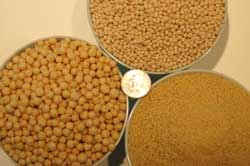
Image source : acornadvisors.com

From my research, I have come to believe that there 3 main types of couscous available.

Moroccan couscous:

This is probably what you would find most often in your shop aisles. These are commonly available and are tiny yellow semolina pasta. All you have to do is to boil sufficient amount of water, turn off the flame, add the couscous and let it sit for 10 minutes with the lid on. The couscous is done when all the water is absorbed and all you have to do is to fluff it with a fork and serve! Wasn’t that easy? Innumerable have been the times when I have just boiled some vegetable stock, added few frozen vegetables along with couscous – a little bit of seasoning and tada! Lunch/Dinner is ready.

Check out a yummy Moroccan Tagine with Couscous


I also find a Whole Wheat couscous variety which is lightly brown in color and cooks the same way as the regular yellow couscous. There is not much of a difference in taste.

Israeli Couscous:

This variety takes a little longer to cook than the Moroccan variety, but I have come to like it way lot than the former. It has more chewy texture to it which I love. These are larger than the Moroccan type, beige white in color, about the size of peppercorns


Colorful, filling and delicious Israeli Couscous Recipe


Lebanese couscous:

This is the largest of all couscous types. I have personally not been able to get my hands on them, but they are supposedly the size of small peas. The cooking process, naturally, is longer then the usual couscous and is more suited for cooking like the way you would do for Risotto.

Note: Make sure whether you have bought the traditional or instant type of Couscous. The traditional couscous takes a longer cooking time, where it is originally steamed in a specialized steamer called as “couscoussiére.”

Health Benefits: It is immensely low in fat and is enhanced with complex carbs. It is rich in dietary fiber, protein, potassium etc

This post was written by Dhivya


Are you interested in contributing to The Daily Tiffin? Drop us an email: thedailytiffin@gmail.com. We look forward to hearing your ideas.

Vegetarian Pyramid Series - Wheat Berries

Thursday, July 23, 2009

Posted by DK


Have you noticed how certain ingredients which were earlier labeled as “Poor Man’s Food” have now come to be adorning the health food stalls of today? Or sometimes even the gourmet plates of people calling themselves the connoisseur of fine food? Paradox or the fate of homosapiens today? – call it whatever, it sounds indeed heartening that whole “complete” foods have come to be cherished and they have finally “arrived” at last.

What Are Wheat Berries?

Among such ingredients, Wheat berries find its rightful place. They are nothing but Whole Wheat grains with the husks removed. The ones responsible for imparting nutrition to our body – the bran, the germ and the endosperm – remain intact and that’s why consuming these are extremely beneficial. For the least amount of calories, you get maximum amount of fiber and nutrition. I mean with such a bargain – what is it that you are waiting for?

How do they look and where to look for them?

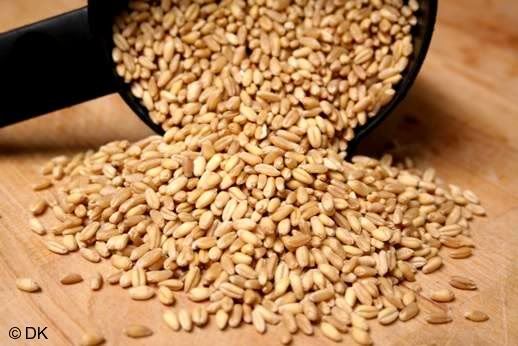
I know when someone mentions a new ingredient to me, my brain cells starts grappling to any image that it could possibly associate to in its memory book and if nothing comes around, gets frustrated. So to avoid this unnecessary process let me show you a picture which will put you at ease and the next time you buy these, you know you are not bringing home something else assuming them to be these berries!


The berries are sturdy grains with brownish-reddish tinges. Here in the U.S they are mostly available in the health food section. In India they can be bought in regular stores which sell grains.

How to cook Wheat Berries?

To do it the propah way, it would have to be:
  • Clean and soak the wheat berries overnight,
  • Cook them on a stove top for 1 to 1-1/2 hours until the grains get chewy and add them to your salads or something of your choice
But the motive of this post is to make sure you consume these grains and not to chase you away with the labor associated with them! I mean the way the current universe is trying to maintain its balance on a roller coaster ride, we don’t have the time to waste – ‘err I mean’ – to embark on such strenuous process.

Hence quick method to cook these is:
  • Buy a Pressure cooker. I know that you know that you can afford it! Awe come-on – imagine the amount of time you save, the extent of nutrition that you are going to gain for the “pounds” [ pun intended ] you are going to lose. And this gadget lasts like forever!!
  • Soak the grain overnight (or forget it! Doesn’t matter).
  • For 1 cup of Wheat Berries add 2 cups water and cook for 15-20 min ( which amounts to approx 5-6 whistles for me in an Indian styled cooker)
For the curious cats - lemme put it in another way - for the Knowledge Thirsty - here is a comprehensive list of ways to cook Wheat Berries, if you are interested, where it includes cooking methods in microwave, stove top, pressure cooker even rice cooker.

Recipes that Make Wheat Berries interesting

Just like there is a myth floating around that vegetarian foods are bland and that they suck ( sorry to burst your bubble, but its that recipe in your hand that does), there is also this hate-hate relationship with foods which are listed under ‘Health Food Section’. Forget your Arborio rice, these Wheat berries when cooked throw up fierce competition in the chewy department. Move over plain old white rice – Wheat berries are here.

They can be enjoyed as
  • Breads (I have one baking in my Oven right now! Yum)
  • Soups ( my recipe below )
  • Stews ( see this recipe and tell me if you are not inspired!)
  • Or come to think of it - throw in some the next time you make your favorite Chicken casserole. No one will know! Even if they do who cares – they will be tasty – so no worries
I have one recipe in my blog to convert you into wheat berry hoarder

Wheat Berry and Pinto Soup is one hearty and yummy appetizer which I assure you will warm its way into your appetite.


I am trying out some pancakes with some wheat berries too! It’s a new whole world out there – Why don’t you take a gander with me to explore these, burp with satisfaction and say bon appétit!

This post was written by Dhivya

Are you interested in contributing to The Daily Tiffin? Drop us an email: thedailytiffin@gmail.com. We look forward to hearing your ideas.

Vegetarian Food Pyramid - Quinoa

Sunday, March 15, 2009

Posted by DK


A chock full wholegrain pantry is what I can boast of, complimented by Nuts and seeds. You probably have heard of antique collectors, but have you heard of one who visits food markets and collects grains? Well that’s me for you. Recently on a business trip to Vancouver, when a colleague during the time off suggested buying trinkets for souvenir, I went to the local Whole Foods market and bought myself Kamut! And I couldn't have been more happier. That’s the value I hold for Nature's best foods. For other whole grain, refer to my previous articles for Oats and Barley. This time I am going to talk about one of my most loved of all whole grains - Quinoa (also called as quinua, petty rice and pigweed).

Quinoa

They form part of my lunch on most of the days and its hard really to get bored with them - so versatile that they are. So let’s get to the reason why I adore them so much.

What exactly is Quinoa?

They have been commemorated as the "Super grain of the future". Pronounced as 'Keen-wa',(you don’t want to know how I used to say them before I knew the correct pronunciation!!) they were hailed by the Incas as "Mother Grain" - who cultivated it for hundreds of years, high in the Andes for self consumption. That's how ancient they are. Though not a common resident in many kitchens, if it gets a better PR for itself, it would soon become an inseparable part of every wo(man)'s pantry - thanks to it being immensely rich in nutrients. Though it is a politically correct statement to say that Quinoa is a grain, it in reality is a relative to, you wouldn’t guess it, the greens like Swiss Chard and Spinach!

Types of Quinoa and What to look for in your market

Although Quinoa leaves are also edible just like Amaranth, they are not commonly available. My research on the web and books tell me that there are 4 types of Quinoa though I have come across only two of them in my local market:

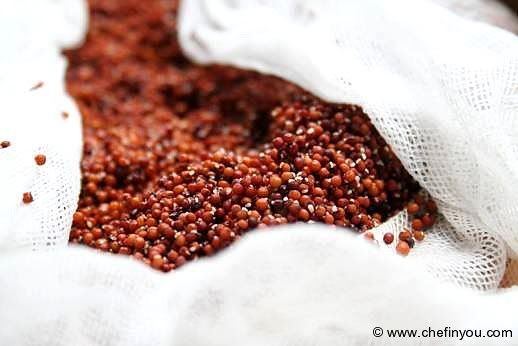
1. Whole Grain - This is what you possibly will come across in your grocery store ( or in health food markets). They are tiny, bead-shaped grains and are slightly bitter but have firm texture. They are an excellent substitute to rice and are cooked in the same way. Unlike rice, these quadruple in size and also become translucent with an unusual white outer ring.(pic as above)

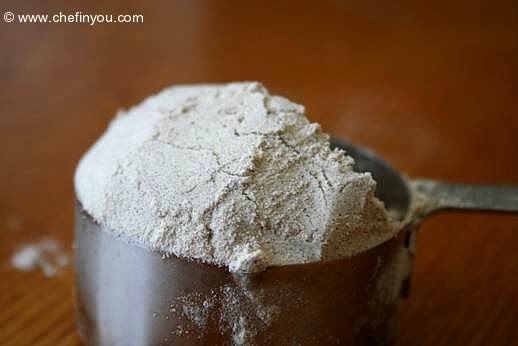
2. Quinoa Flour - These make a nutritious addition to your day to day bakes, be it for cakes, cookies or bread. They can also be used to make your delicious pasta. But if not available, you can always find Pasta made using Quinoa in the market nowadays. They can also be substituted for whole wheat flour in order to increase the nutritional value. [ This picture is courtesy of http://www.organicroad.com ]

How to make Quinoa Flour at home?
For 1 cup of Quinoa flour, grind 3/4 cup of whole Quinoa until it gets a cornmeal texture.

3. Puffed Quinoa - It is similar to puffed corn. These make for crunchy toppings on your favorite desserts, even ice-cream. They are excellent for morning cereal.

[This picture is courtesy of http://phdelicious.wordpress.com ]


4. Pearly Quinoa- They have a larger grain and are usually opted for breakfast porridge along with milk or used in soups.

There are also supposed to be red and black varieties of Quinoa available. Look for them in your grocery store.

How to cook Quinoa Grain?

In its natural state, Quinoa consists of a waxy coating called Saponins which is what gives it the bitter taste. So, if that’s the case then follow this precautionary procedure:

Soak your quinoa in cold water for about 2 hours. Drain, rinse and soak again for another 2. Then rinse it vigorously to remove the outer layer and cook.

P.S But no cause for panic. Markets are a wonder these days. They do everything for you. I say this since I am yet to come across Quinoa with this coating. They are all done and kept ready, so mostly you wouldn’t need to do this step.

How to cook on Stove top

For 1 cup of quinoa, bring two cups of cold water to a boil. For a more al dente texture, use only 1.5 cups of water

Cover the quinoa and bring it to a simmer. It takes approx 10-15 minutes and you know its done, when the germ separates from the seed and you will see white colored rings sort’ a things floating around. (its not as bad as it sounds !)

Let it cool, fluff it up and serve.

How to cook Quinoa in a Pressure Cooker

For 1 cup of Quinoa, bring two cups of water. Pressure cook for 5-10 minutes. You can also add salt to the cooking water or replace water with Vegetable/Chicken broth.

How to cook Quinoa in a Microwave

For every one cup of the grain, use 2 cups of water. Place them in a microwave proof dish and cook for about 3-5 minutes. Leave it to stand, stir , and then cook further for another 2-3minutes..Let it stand in order to let it soak up any liquid. You can drain any extra liquid if any. But care should be taken to avoid letting the grain go completely dry while cooking in a microwave.

How to sprout Quinoa?

[ Pic courtesy of http://www.flickr.com/photos/apathyduck/24543590/]

Like its counterparts, Quinoa grain can also be sprouted. It takes 2-3 days to sprout and must be eaten right away, since they don’t keep very well. A rough gist of the process as below:

1. Rinse the seeds vigorously to remove the saponin coating.
2. Soak the Quinoa seed for about 2-4 hours. Drain.
3. Use your sprouter basket or in a bowl sprout for 12 hours.
4. It sprouts pretty fast. They can also be grown for their leaves.

For a more detailed instruction please refer to this article here

Health benefits of Quinoa

• Unlike its counterparts, Quinoa is a complete protein, since it contains all the eight essential amino acids.
• It has excellent source of potassium, calcium, zinc, magnesium, iron and B vitamins
• Thanks to the magnesium content, they are Nature’s medicine for people suffering from Migraines. Add them to you diet often. They are also excellent for the heart.
• Since they are an insoluble fiber, it helps in gallstone prevention.
• They are go-to foods for diabetic patients, since it helps to decrease the blood sugar levels.
• If you suffer from celiac disease, then look no further for Quinoa is here. It is gluten free.

Although they can be enjoyed in various forms, say in pilaf's, stuffings,bakes and breakfast cereals, they being immensely versatile can be made in any way your creative mind takes you. I recently thought of making my leftover cooked quinoa into a baked goodie and used up my left over 15 bean soup mix to make these delicious Baked Quinoa and 15 bean Croquettes. For a pictorial and the recipe refer to this post


This post was written by Dhivya


Are you interested in contributing to The Daily Tiffin? Drop us an email: thedailytiffin@gmail.com. We look forward to hearing your ideas.