Showing posts sorted by relevance for query written by Asha. Sort by date Show all posts

Recipe: Cornish Pasties

Friday, December 01, 2006

Posted by Meeta K. Wolff

Photo courtesy Asha Arvind

For the weekend we have an interesting recipe for you. Cornish Pasties are very versatile and can be served for a lunch, snack and are just perfect for any lunchbox. You can fill the pasties anyway you want and according to any taste. Your kids will certainly get a kick out of guessing what mummy filled the pasties with this time ;-).

Have you filled your pasties with anything out of the norm? Tell us about it.

We thank Asha from Foodies Hope for this recipe contribution.

What are Cornish Pasties?
They are originally from Cornwall, England. They say that no Cornwall Holiday is complete without sampling a delicious proper Cornish pasties, whether they are served piping hot, crisp and golden brown just out of the oven, or eaten cold. With the decline of the mining industry in Cornwall , many Cornishmen were forced to emigrate as far as USA, Australia, New Zealand and South Africa and they have taken the pasty recipe with them !

Cornish Pasties ( Makes about 6 Pasties)
Adapted from Linda's of Out of the Garden Pasties

For the crust:

2 - 2 1/2 cups all-purpose flour
1 tsp salt
1/2 c shortening (crisco )
1/8 cup milk, or just enough to form the dough

For the filling:

1/2 - 1 lb lean, tender sirloin,
1 medium Rutabaga
1 medium onion
2-3 large carrots
1-2 large red potatoes

Seasonings:
Any spices or/and herbs you like
salt and pepper
butter

Eggwash for baking:
1 whole egg mixed with 2-3 Tbsp water

How to:

Preheat oven to 350 F.

1. Mix flour and salt. Now add in the shortening and mix with your fingertips until it looks crumbly. Add milk, little by little just enough to get a firm dough. Divide the into 6 pieces equally and cover the dough to prevent drying and keep it aside.
2. Cut the sirloin 1/4" pieces, and cut peeled vegetables into uniform 1/4" square pieces as well .You can cook vegetables for 5 mins in the microwave with little water until little tender so you don't have to worry about whether they are cooked in the oven, specially Rutabagas. Making sure you don't have any liquid in the meat or veggies, mix all the ingredients with any spices , herbs you like , salt and pepper to taste. Divide into 6 portions.
3. Roll out a dough ball to 1/8" to 1/4" thick circle about 8" in diameter. Must be thick enough to hold the filling without tearing the crust. Place these on a baking sheet lined with wax paper or just spray with some no-stick spray. .Put one portion of filling, a pat of butter, fold one half over and seal both edges with water and press with fork to seal. Brush with egg wash all over the pasties. Prick the top with fork to make tiny holes. Repeat with the remaining dough balls.
4. Bake for 50 mins to 1 hour or until the crust is golden. Cool on a wire rack. Serve hot or cold with any sauce you like.

Note: Traditionally, meat and vegs are just mixed together raw and seasoned with salt and pepper before baking. I cooked the vegs just until tender to prevent uncooked surprises inside after baking! It's would be your choice , whether to add them raw or cook for 5 mins before you bake. Same goes for adding spices and herbs in the filling too.


This recipe was written by Asha from Foodies Hope.

If you are also interested in contributing to The Daily Tiffin drop us an email: blogmeeta@gmail.com. We look forward to hearing your ideas.


Friday Recipe: Cheesy Tomato Penne Bake

Friday, January 19, 2007

Posted by Meeta K. Wolff


Here is an easy but delicious dish with Penne pasta smothered in Tomato and cheese and also full of bone building calcium which is good for the whole family. Tastes wonderful just out of the oven. Serve with a salad for healthy balanced meal.

You Need: Serves 4-6
12 oz. penne pasta ( 3 cups), or any other kind you like,uncooked
1 lb. lean ground beef or turkey or Chicken or Italian Sausage,case removed
1/2 cup grated or chopped mixed vegetables
2 cans (145 oz. each) Diced Tomatoes with Basil, Garlic and Oregano, undrained
1 can (15 oz.) Tomato sauce
2 packages (8 oz each ) Shredded Mozzarella or Bistro blend Cheese, divided
(Reserve half for topping; stir remaining cheese into pasta mixture)
1/4 cup Parmesan cheese
No-Stick Cooking spray or Olive oil

How To:
1. Cook pasta ,drain and keep it aside. Preheat oven to 350F.
2. Heat 2 tsp butter, saute` grated vegetables like onion, Green bell pepper,carrots ,celery etc in a large saucepan over medium-high heat.
3. Add in ground meat ,brown. Stir in tomatoes and tomato sauce, bring to boil. Reduce heat; simmer uncovered for 6-8 minutes. Add salt and pepper.
3. Add cooked pasta to meat mixture or vegs. Toss well. Add half of the of the cheese; mix again. Spray a 13 by 9 inch baking dish with cooking spray.
4. Pour pasta mixture into dish; top with remaiining cheese. Place it in the oven.
5. Bake for 20 minutes or until bubbly and cheese is melted.

Note: If you want to make it vegetarian, add 2-3 cups of chopped mixed veg to replace meat.
If you don't have canned Basil tomatoes, add diced tomatoes with 1 tsp garlic pd, 1/2 each tsp dry Basil and Oregano.
If you would like cut down the amount of cheese to just 8 oz, that should be okay too.
(Recipe: Sargento.com with some changes)

Enjoy!


This recipe was written by Asha of Foodies Hope.


Are you interested in contributing to The Daily Tiffin? Drop us an email: blogmeeta@gmail.com. We look forward to hearing your ideas.
Diwali Sweet Treats

Thursday, October 23, 2008

Posted by Meeta K. Wolff

diwali
Image Source: stock.xchng.com In Prayer

This year Diwali falls on October 28th and many of our Indian readers are probably busy getting ready for this spectacular festival.

Diwali or Deepawali is celebrated by Indians all across the globe and is celebrated for five consecutive days at the end of Hindu month of Ashwayuja. Of all the several colorful festivals India offers throughout the year, Diwali is the most vibrant, fun and glamorous festival of all.

It usually occurs in October/November, and is one of the most popular and eagerly awaited festivals in India. Also known as the Festival of Lights, Indians will decorate their houses with lights, candles and lamps - or as they are traditionally known in India - diyas. The lights and lamps signify the lighting of darkness and victory of good over the evil within.
Traditionally a Hindu festival, Jains and Sikhs alike regard it as a celebration of life and use the occasion to strengthen family and social relationships.

There are several beliefs as to the origin of the holiday. The most common version is that Hindus celebrate Diwali to mark the time when Lord Rama achieved victory over Ravana. Hindus believe that whenever the power of evil increases in the world, Vishnu comes down to earth in a different form to defeat evil. These forms are called Avataras. Krishna and Rama are the popular Avataras of Vishnu. Diwali celebrations are especially a time for telling stories - about Vishnu and his wife Lakshmi, about Krishna, Rama and his wife Sita and any other tales that personifies the good winning over evil.

For us Indians, this festival means connecting with family and friends and what a better way than to do it with food and sweets. Diwali is a period that marks new beginnings. Houses are thoroughly cleaned, a kind of Spring cleaning in Autumn, and re-decorated. The courtyards in Indian homes are decorated with rangoli, which are vibrant patterns created with powdered or wet paint. Doorways and adorned with decorative garlands made with the traditional gold marigolds and fresh mango leaves. 

The kitchen becomes the hub for many households’ days before Diwali. Sweets, savories and snacks are made, lavish dinners are prepared, it truly is a festival unlike many others I have experienced. No expenses are spared, and everybody buys the best ingredients that is affordable to them.

As I know many of our Indian readers will be busy looking for ideas, I decided to put together a few great ideas for sweet treats I found while blog surfing.

Sweets


Indian sweets, which is known as 'mithai', are made with a variety of ingredients like semolina, wheat flour, chickpea flour or thickened milk, to which freshly grated coconut, carrots or white pumpkin is sometimes added. The mixtures, which are perfumed with sweet spices like cardamom and nutmeg, and embedded with nuts and raisins, are shaped into colorful shapes. All these processes - preparing, consuming and giving of sweets – are significant facets of the festival.

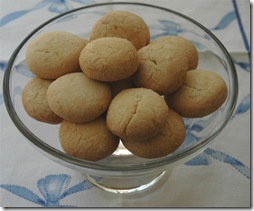
Nankatai Image courtesy of The Cooks Cottage Nankatai is a lovely flaky and buttery biscuit. They are typically served when the guests arrive around tea time. I found a perfect recipe for these delicate biscuits at The Cooks Cottage who makes her Nankatai recipe with saffron and cardamom.

Besan Laddoos are small balls of sweet heavenly delights. They are made by gently roasting gram flour and flavored with cardamom. Besan laddoos are extremely popular in India and are served as a simple sweet treat or as a bring along when visiting friends. Asha of Foodie’s Hope shares her delicious recipe for besan laddoos made the traditional way, by roasting the gram flour. However if you are looking for a quick method Nandita offers a great 5 minute beasan laddoo version.

Coconut Burfi is a lovely soft, chewy sweet often presented as a gift during festivities in India. Indira of Mahanandi makes a great version of the coconut burfi, without the addition of milk or ghee. She simply uses two coconuts, which she grated and adds cardamom for a gorgeous aroma. If you prefer a fruitier version over at Red Chillies you’ll find a rather scrumptious mango coconut burfi.

Sheera is a warm sweet very much like fudge, which is made using semolina, saffron, cardamom, raisins and nuts. There are several great recipes, some using fruit to flavour the sheera. One I found to be beautifully authentic was this Sheera recipe from Food for ThoughtGajarHalwa 05.

Kheer – a gorgeous milky rice pudding, made with rice, rice flakes or sago. Deeba provides us with delicious kheer, spiced with cardamom, nutmeg and saffron.

Gajar Ka Halwa is a silky carrot pudding, which is one of India’s most popular desserts.  There are several variations for this delectable dessert. My version is one I got from my grandmother. Using khoya, my gajar ka halwa adds a nutty mix of pistachios, cashews and almonds and uses very little sugar.

That was my quick tour of the blog-o-world of Diwali sweet treats, especially for you.

We from the Daily Tiffin team wish all celebrating Diwali a peaceful and joyous festival. Enjoy the time with family!


Are you interested in contributing to The Daily Tiffin? Drop us an email: thedailytiffin@gmail.com. We look forward to hearing your ideas.

This Post was written by Meeta

Safety and Care: Kids in the Kitchen II

Monday, May 28, 2007

Posted by Meeta K. Wolff

The kitchen can be a very dangerous place for the younger ones on our lives. Toddlers and small children are very inquisitive and in their innocence will try anything lying open or pull anything that is within their reach.

Due to this reason the many points and guidelines focusing on safety and care in the kitchen when kids are around, cannot be stated often enough.

This is a pretty sensitive subject for me personally. My brother was involved in a kitchen accident at the age of 3. Today he is 32 and still suffers from the issues that plague him from this accident. One day he ran into the kitchen where our house-help was boiling water. She was not in the kitchen at the time my brother ran into the kitchen. Unfortunately the pot was a little too close to the edge and in his haste he managed to somehow pull the whole pot onto himself. He had third degree burns and a suffering of a life time. Surgeries and plastic surgeries, therapy and rehab followed. Till today he has not "healed". In his head he sometimes still fights certain demons that follow him.

So, writing this post is a bit difficult, but at the same time a bit satisfying. Satisfying because I hope my experience might help others who read this.

With just a few simple steps you can make the kitchen a safer place for your children. Prevention is the key word that will help you to avoid injuries, burns, and even fatality.


  • Keep the pot and pan handles always turned to the back. This will keep children from intentionally or unintentionally pull them down from the stove and causing burns or other serious injuries.

  • Be sure that children cannot climb on top of counters or cabinets. Tablecloths and other such hanging placements should be removed or kept out of range of your toddlers or small children. This prevents them form pulling things down onto themselves.

  • Keep hot items at a safe distance. Never place anything hot on the edge of the counter. When moving hot items around make sure your toddler or small child is not in your way. It is safer to keep toddlers in a playpen or highchair when cooking in the kitchen, instead of allowing them to crawl on the floor.

  • When opening the oven doors make sure that your child is not anywhere nearby. A toddler may unintentionally grab for the oven door and burn himself/herself.

  • Microwaves should be placed out of reach for children. The best place for it is in between the wall cabinets.

  • Use a microwave door lock to keep the microwave locked.

  • Make sure the containers or formulas bottles that come out of the microwave are not hot. Let them to cool before allowing your children to handle them.

  • Keep all appliances and their cords tucked away neatly. Allowing them to dangle over the counter top may cause children to pull them down from the counter.

  • Plastic plug protectors are the perfect way to prevent tiny fingers sticking into the sockets. All sockets accessible to toddlers or small children should be protected with such plastic plug protectors.

  • When older children are in the kitchen helping out, supervise them and never leave them out of sight.

  • Keep sharp objects out of all children's reach. Knives should be placed in knife blocks and stored towards the back of the counter.

  • Detergents, washing liquids and other cleaning material should be stored in a cabinet above the sink and not below the sink.


I have a wonderful online learning game I play with Soeren every now and then. It is called Welcome to Welltown. In Welltown your children will learn how to stay healthy and keep themselves safe by doing certain activities. A playful way to teach them such important lessons. We too spend our time in Welltown and often we focus on Kitchen Safety. Hope you and your children enjoy playing the game.

Review your kitchen with a sharp eye and make it a safe place for your children. Although you will find these points obvious and you might have often seen them it is so vital to take them into consideration before something really happens.

Further resources:
Kitchen Safety for children on their own
Kitchen Safety Fire Prevention in the Kitchen

I would also like to thank Asha and Sharmi for contributing to our Safety in the Kitchen month.

You will also find valuable information from our own Daily Tiffin team on out theme this month - Safety & Care. Each member shared helpful and important information for various topics, which should be actually be bookmarked for future reference.

We wish you a safe and accident free week.


If you like what we girls do here and would like to vote for us in the Blogger's Choice Awards here. Thanks for your support!


Are you interested in contributing to The Daily Tiffin? Drop us an email: blogmeeta@gmail.com. We look forward to hearing your ideas.

This Post was written by Meeta from What's For Lunch, Honey?